Minimum wage by state, 2026 and 2027
Updated November 9, 2026Each row sourced to the state agency
Short answer
The federal minimum wage is $7.25 an hour, and it applies in the 20 states that don’t set a higher rate of their own.
The District of Columbia’s minimum wage, $18.40 an hour, is higher than any state’s.
16 states raise their minimum wage on January 1, 2027.
Every state’s rate today and next
Download as CSV| State | Today | Tipped cash wage | Next change |
|---|---|---|---|
| Alabama | $7.25federal | $2.13 | None scheduled |
| Alaska | $14.00 | $14.00 | $15.00 on July 1, 2027 |
| Arizona | $15.15 | $12.15 | $15.65 on January 1, 2027 |
| Arkansas | $11.00 | $2.63 | None scheduled |
| California | $16.90 | $16.90 | $17.40 on January 1, 2027 |
| Colorado | $15.16 | $12.14 | $15.71 on January 1, 2027 |
| Connecticut | $16.94 | $6.38 | $17.48 on January 1, 2027 |
| Delaware | $15.00 | $2.23 | None scheduled |
| District of Columbia | $18.40 | $10.30 | Not yet announced |
| Florida | $15.00 | $11.98 | Not yet announced |
| Georgia | $7.25federal | $2.13 | None scheduled |
| Hawaii | $16.00 | $14.75 | $18.00 on January 1, 2028 |
| Idaho | $7.25federal | $3.35 | None scheduled |
| Illinois | $15.00 | $9.00 | None scheduled |
| Indiana | $7.25federal | $2.13 | None scheduled |
| Iowa | $7.25federal | $4.35 | None scheduled |
| Kansas | $7.25federal | $2.13 | None scheduled |
| Kentucky | $7.25federal | $2.13 | None scheduled |
| Louisiana | $7.25federal | $2.13 | None scheduled |
| Maine | $15.10 | $7.55 | $15.70 on January 1, 2027 |
| Maryland | $15.00 | $3.63 | None scheduled |
| Massachusetts | $15.00 | $6.75 | None scheduled |
| Michigan | $13.73 | $5.49 | $15.00 on January 1, 2027 |
| Minnesota | $11.41 | $11.41 | $11.87 on January 1, 2027 |
| Mississippi | $7.25federal | $2.13 | None scheduled |
| Missouri | $15.00 | $7.50 | None scheduled |
| Montana | $10.85 | $10.85 | $11.20 on January 1, 2027 |
| Nebraska | $15.00 | $2.13 | $15.26 on January 1, 2027 |
| Nevada | $12.00 | $12.00 | None scheduled |
| New Hampshire | $7.25federal | $3.27 | None scheduled |
| New Jersey | $15.92 | $6.05 | $16.48 on January 1, 2027 |
| New Mexico | $12.00 | $3.00 | None scheduled |
| New York | $17.00$16.00 in the rest of the state | $11.35 | No raise on January 1, 2027 |
| North Carolina | $7.25federal | $2.13 | None scheduled |
| North Dakota | $7.25federal | $4.86 | None scheduled |
| Ohio | $11.00 | $5.50 | $11.40 on January 1, 2027 |
| Oklahoma | $7.25federal | $2.13 | None scheduled |
| Oregon | $15.55$16.80 in the Portland Metro area$14.55 in nonurban counties | $15.55 | Not yet announced |
| Pennsylvania | $7.25federal | $2.83 | None scheduled |
| Rhode Island | $16.00 | $3.89 | $17.00 on January 1, 2027 |
| South Carolina | $7.25federal | $2.13 | None scheduled |
| South Dakota | $11.85 | $5.925 | $12.30 on January 1, 2027 |
| Tennessee | $7.25federal | $2.13 | None scheduled |
| Texas | $7.25federal | $2.13 | None scheduled |
| Utah | $7.25federal | $2.13 | None scheduled |
| Vermont | $14.42 | $7.21 | $14.91 on January 1, 2027 |
| Virginia | $12.77 | $2.13 | $13.75 on January 1, 2027 |
| Washington | $17.13 | $17.13 | $17.73 on January 1, 2027 |
| West Virginia | $8.75 | $2.62 | None scheduled |
| Wisconsin | $7.25federal | $2.33 | None scheduled |
| Wyoming | $7.25federal | $2.13 | None scheduled |
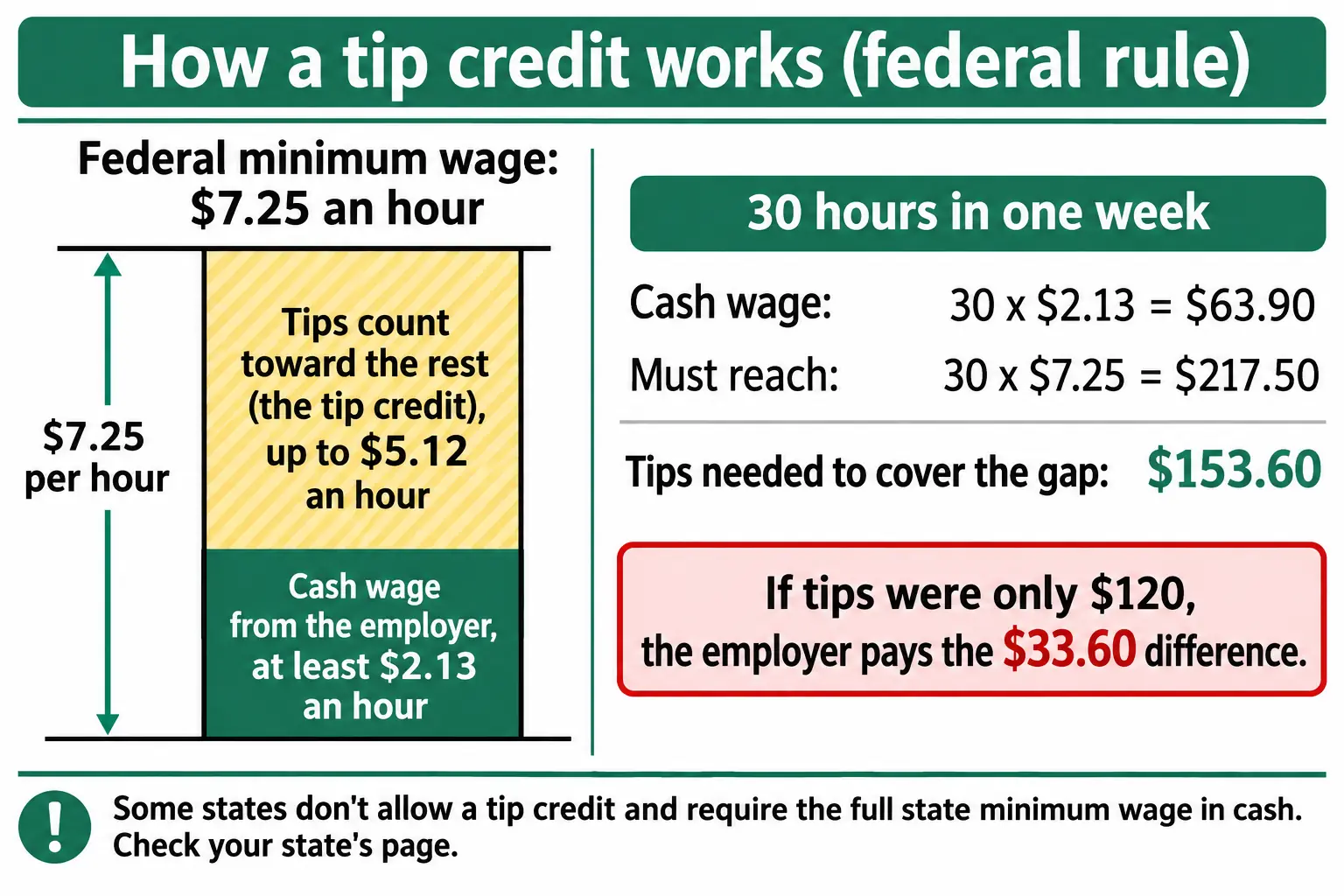
Tipped cash wage is the least an employer may pay a tipped worker directly when tips make up the rest; where it equals the full rate, the state doesn’t allow a tip credit. Where federal law governs, the federal tipped cash wage is $2.13. Federal law also lets employers pay workers under 20 at least $4.25 an hour during their first 90 consecutive calendar days on the job. Cities and counties in some states require more.
Raises on January 1, 2027
- Arizona$15.65
- California$17.40
- Colorado$15.71
- Connecticut$17.48
- Maine$15.70
- Michigan$15.00
- Minnesota$11.87
- Montana$11.20
- Nebraska$15.26
- New Jersey$16.48
- Ohio$11.40
- Rhode Island$17.00
- South Dakota$12.30
- Vermont$14.91
- Virginia$13.75
- Washington$17.73
Get your state’s rate change by email
One email when your state changes a rate, a law passes or a deadline moves, plus a monthly list of what’s due. Free. Unsubscribe any time.